About me
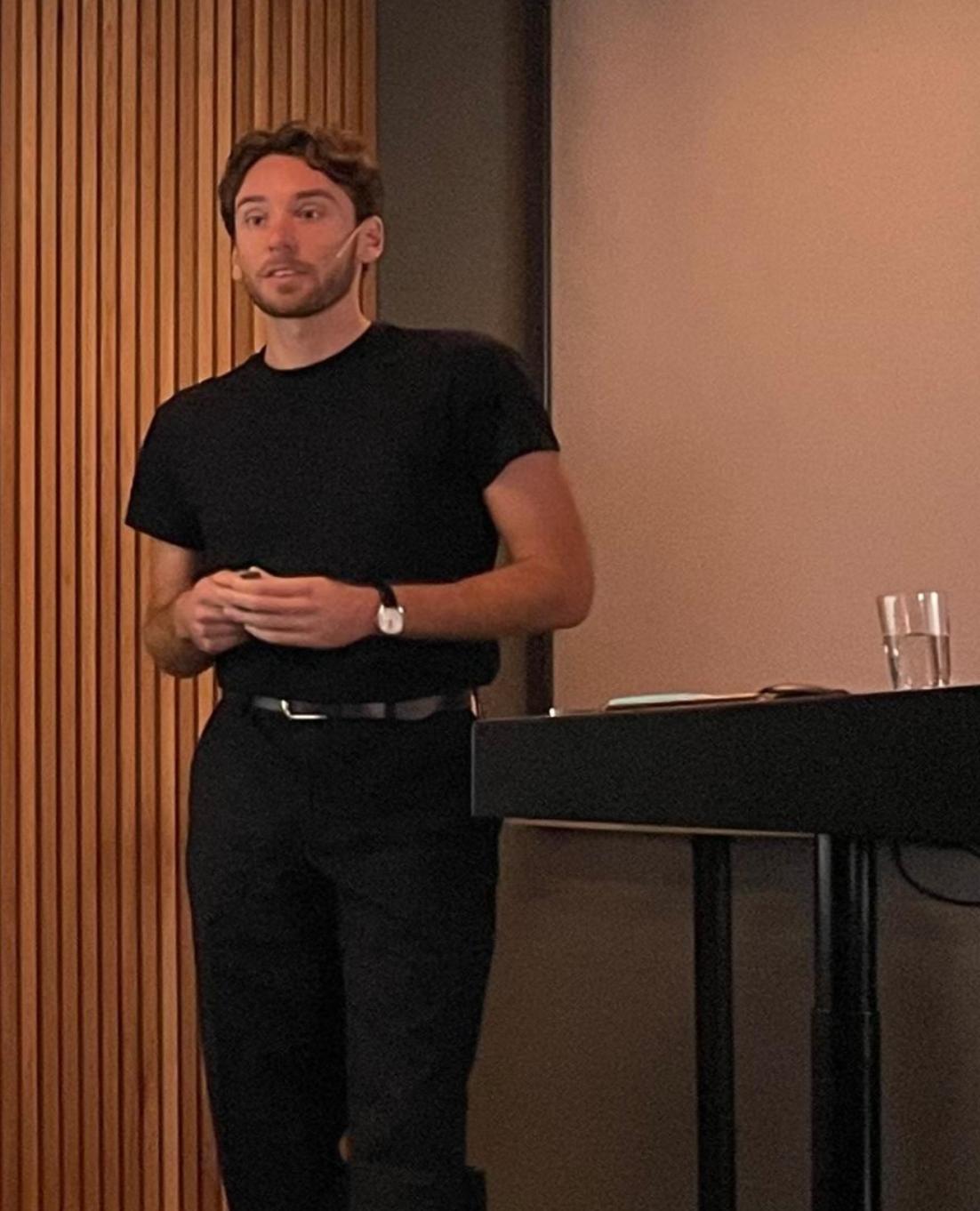
Matteo Guardamagna
I am a Postdoctoral Fellow in the Moser Group at the Kavli Institute for Systems Neuroscience in Trondheim, where I study the ontogeny of our sense of space.
During my PhD I developed new implant systems for mice (open hardware on GitHub) and studied the spatial and temporal code of CA1 place cells 1;2.
Passions on the side: poetry, history, cooking & foraging, and the Mediterranean sea. ||
About my research
Developmental Algorithms for Natural Behaviors
My work aims to identify the developmental algorithms by which neural computations emerge from developing circuits, establish how they are calibrated by the developing body and brain states, and determine how they become anchored to the world and the ecological niche in which animals develop.
Studying population dynamics in development, linking neural computation to behavior beyond the level of single cells.
Neural circuits are not born computing. Yet from the earliest days of postnatal life developing animals already produce a rich repertoire of behaviors. We still lack an account of the population-level computations that developing circuits perform, and of how they support early behavior. How does a brain with immature circuitry, a rapidly changing body and an initially unfamiliar world come to generate the neural dynamics that support natural behavior, and how does that emerging behavior, in turn, shape the circuits?
My laboratory will address these questions by combining high-density electrophysiology in developing animals with 3D reconstruction of behavior and physiological state, analysis of population geometry, and cell-type-specific genetic manipulations. We will uncover the developmental algorithms for sensory, motor and cognitive functions that give rise to natural behaviors.
-
01
Formation
How does population geometry emerge from developing circuitry?
-
02
Calibration
How does it acquire its dynamics from a developing body?
-
03
Anchoring
How does it become referenced to the animal’s world and ecological niche?
Selected work
Papers
- 2026
- 2026
-
2025
Direct entorhinal control of CA1 temporal coding Nature Communications
- 2023
- 2022